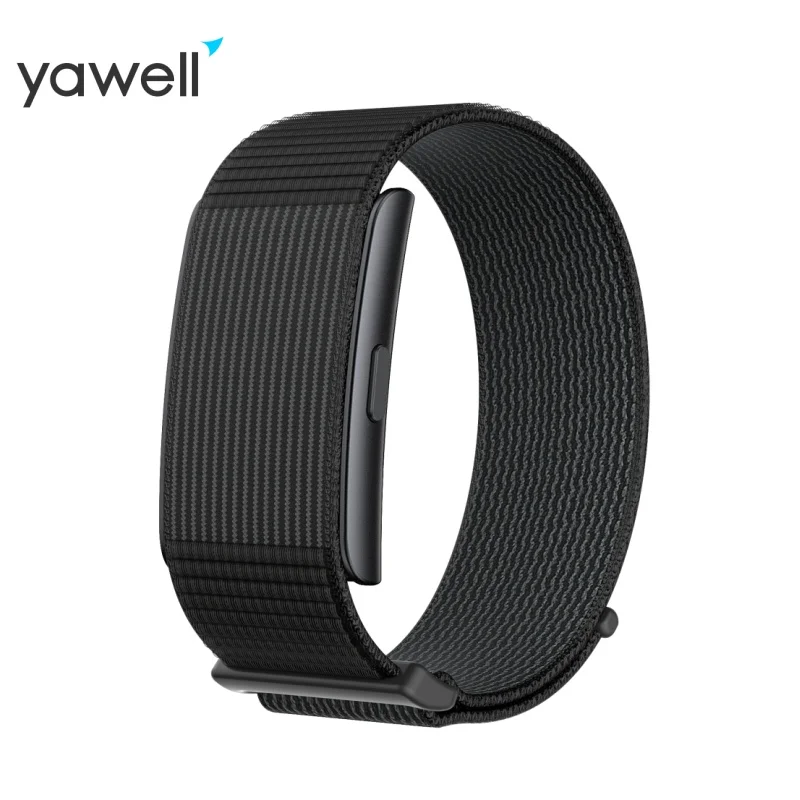
Yawell Y28C Screenless Smart Health Bracelet specifications
| Attribute | Value |
|---|---|
| MOQ | 1000 pieces |
| Price | $11.13-11.55 |
What are the primary application scenarios for deploying a screenless health bracelet in a B2B context?
Corporate wellness programs represent a prime application, as human resources departments can distribute these bracelets to employees to track aggregate activity levels without interrupting the workday with notifications. Similarly, insurance companies can utilize the devices for policyholder wellness tracking, offering the hardware as a value-added perk that encourages healthier lifestyles while collecting anonymized data. Educational and sports organizations can deploy the Y28C to monitor student or athlete physical metrics during training, ensuring that focus remains on the physical activity rather than a digital interface. Furthermore, the low unit cost makes it an excellent candidate for healthcare providers running community health studies or patient monitoring trials where budget constraints are strict.
How does the installation and compatibility work for a device without a built-in display?
Without a screen to navigate menus, the initial setup process is streamlined entirely through the paired smartphone, reducing the learning curve for end-users. The bracelet operates autonomously in the background, continuously syncing collected health metrics to the host device via standard wireless protocols. This architecture ensures that the wearable remains lightweight and unobtrusive, while the heavy lifting of data processing and graphical display is handled by the more powerful smartphone processor. For B2B buyers developing custom software, this screenless approach simplifies the integration process, as the hardware acts primarily as a sensor hub feeding data into their existing application ecosystem. Compatibility is therefore centered on the companion app's ability to interface with modern smartphone operating systems, ensuring seamless data transfer for the end-user.
What procurement strategies should buyers consider given the 1000-piece MOQ and the $11.13-$11.55 price range?
The narrow price window of $11.13 to $11.55 suggests a stable manufacturing cost, allowing procurement managers to forecast budgets with high accuracy across large orders. Distributors can position this product in the budget-friendly tier of their wearable catalog, undercutting screen-equipped competitors while still offering core health tracking capabilities. For organizations integrating the bracelets into a paid service, such as a subscription health platform, the low hardware cost allows the device to be subsidized or offered as a free inclusion to drive service adoption. It is advisable for buyers to align their order volume with a clear distribution or deployment roadmap to ensure the 1000-unit inventory is efficiently allocated. Additionally, the low price point provides excellent flexibility for custom branding or packaging modifications without pushing the final landed cost into a premium bracket.
Products we manufacture
- Yawell Y28C Screenless Smart Health BraceletAsk for price →
Get a quote
Tell us what you need and we reply with pricing and lead time.
WhatsApp EmailContact the supplier
WhatsAppEmailVerify us on our source listing: https://yawell.en.alibaba.com/